Model agnostic by design

Model-agnostic AI, built for your stack.

Archon Agents routes every task to the engine that fits it, frontier, fast, open or private local models, under one orchestration layer. Swap models as the field moves, without rebuilding your workflows.

Definition

What is a model-agnostic AI platform?

A model-agnostic AI platform is software that runs AI work across many large language models instead of being tied to one vendor. It sends each task to the model best suited to it, such as a frontier model, a fast low-cost model or a private local model, and lets you change models without rebuilding your workflows.

It is also called an LLM-agnostic or multi-LLM platform. In machine learning research, “model-agnostic” also names interpretability methods that explain any model; this page uses the business meaning.
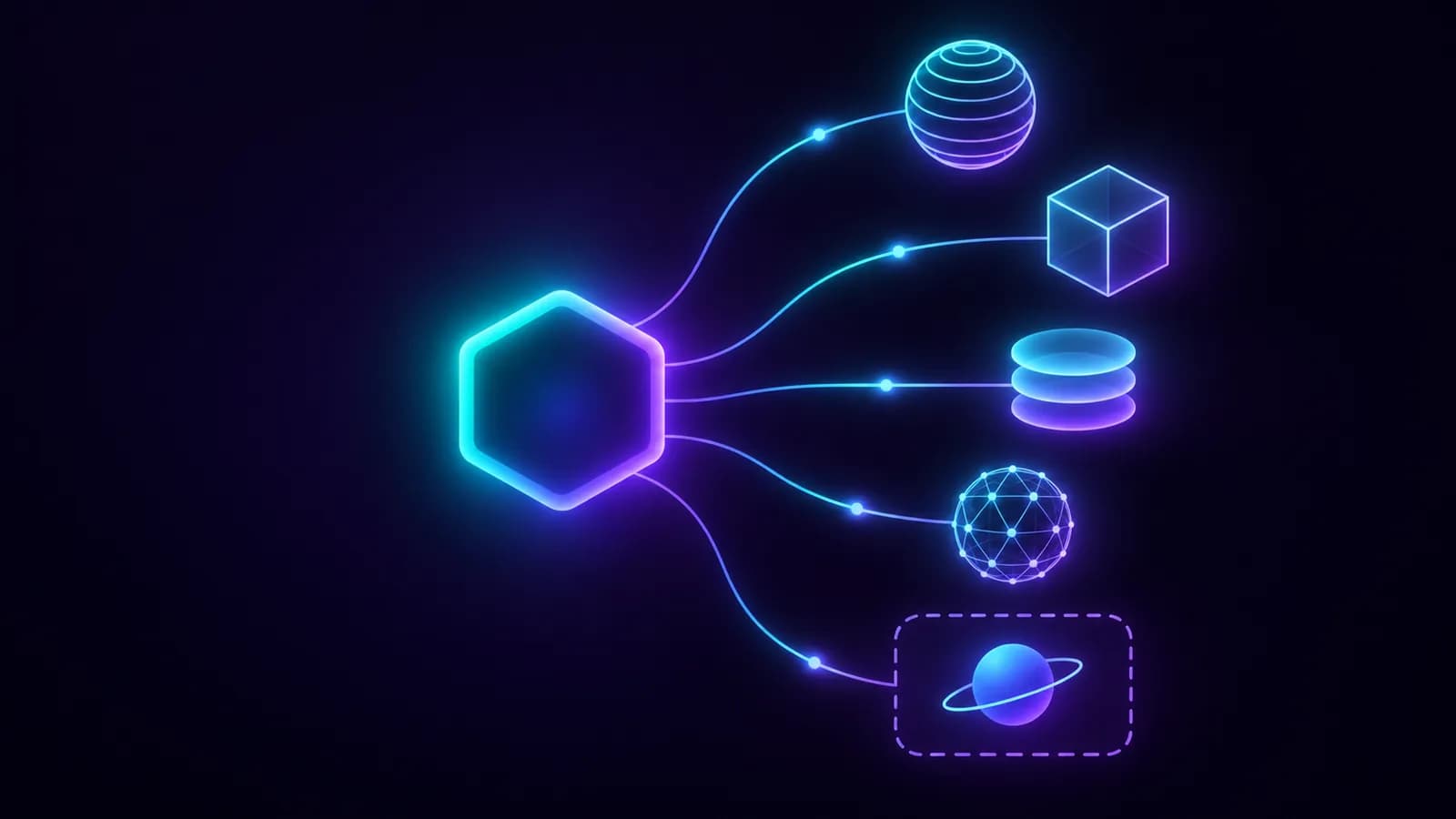
An orchestration hub routing tasks along separate paths to five different AI model engines, with one private local model inside a dashed security boundary
Model-specific

One vendor decides for you

  • Built around one provider’s models
  • A price, policy or quality change hits every workflow
  • Sensitive data goes wherever that provider runs
  • Switching means rebuilding prompts and integrations
Model-agnostic

You choose per task

  • Each task routed to the engine that fits it
  • Private local models for data that cannot leave
  • Swap models as they improve, no rebuild required
  • One approval queue and audit log across every model

How routing works

Every task goes to the right engine.

The Archon Agents orchestration layer reads each task before it runs and sends it to the model that fits. Model selection happens per task, not once per contract, and private local models sit on the same routes as frontier ones.

SensitivityConfidential or regulated work stays on private or on-prem models inside your perimeter.
Cost and speedHigh-volume tasks go to fast models; hard reasoning goes to frontier models.
PolicyYour rules decide which models are allowed for which data, team and workflow.
ClaudeGPTGeminiGrokLlamaMistralQwenDeepSeekLocal / on-prem

Frontier, open and local

One platform, many models

Why it matters

Choose models on merit. Keep your rules.

For an enterprise LLM program, being model agnostic decides who stays in control of your AI operations: your team, or a single vendor.

No vendor lock-in

Your workflows, prompts and integrations are not tied to one provider, so a change at one vendor does not stall your operation.

Data stays private

Route sensitive work to private or on-prem models. Customer prompts, files, outputs, and workspace data are not used to train foundation models.

Swap models as they improve

When a better or cheaper model ships, move the tasks it suits onto it. Swap engines as the field moves, no rebuild required.

Governance on every model

SSO, RBAC, approval queues, and audit logs apply to every agent action, whichever model produced it.

Deployment options

Run it where your data already lives.

Archon Agents runs in managed cloud, your private VPC, or fully on-premises. Pick the boundary first, then route each task to the models allowed inside it.

Managed cloud

Archon Agents operates the infrastructure. Your team works in the Command Center while we run the stack and the model routes.

Your private VPC

Deploy inside your own cloud account and network boundary, with only the models you approve.

Fully on-premises

Run on your own hardware with private local models for work that can never leave your walls.

Read the Archon Agents security model →

Where it shows up

Model agnostic across both products.

Archon Workforce and Archon Creative Studio are separate products with separate subscriptions. Both route work across models under the same governance.

Archon Workforce

Six specialist agents under one orchestration layer.

The orchestrator matches each agent’s work to the model that suits it, then routes every outbound action through your approval queue before it executes.

Per-task model selectionResearch, drafting, analysis and engineering each use a fitting engine.
One Command CenterApprovals, deliverables and model usage in a single client view.

Explore Archon Workforce →

Archon Workforce command center with active agents, approvals, deliverables and usage

Archon Creative Studio

Cinematic video, brand visuals, and avatars at scale.

Creative Studio puts image, video, voice and music engines behind one workspace, with model routing and governance included in the managed beta.
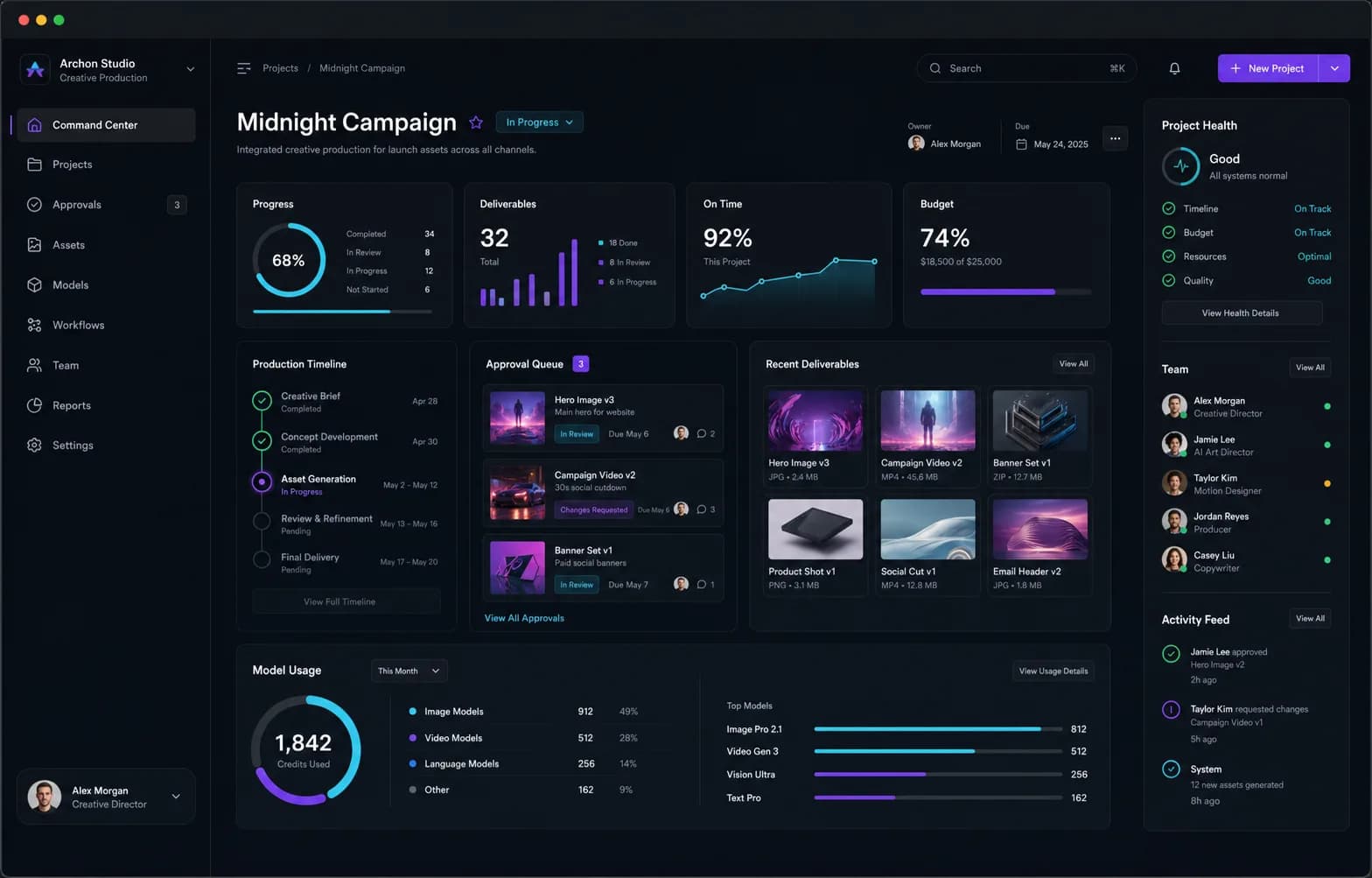
Engines side by sideCompare and combine creative models without switching tools.
Governed outputApprovals and usage tracking cover every engine you run.

Explore Archon Creative Studio →

Archon Creative Studio command center with project status, approvals, deliverables and model usage

FAQ

Model-agnostic AI questions.

What does model agnostic mean?+
Model agnostic means a system is not tied to one AI model or vendor. In business software, a model-agnostic AI platform can run the same workflow on different large language models and switch between them without a rebuild. In machine learning research, the term also describes interpretability methods, such as LIME and SHAP, that can explain any model.
What is the difference between model agnostic and model specific?+
A model-specific platform is built around one provider’s models, so its quality, pricing and data handling follow that provider. A model-agnostic platform separates your workflows from the model underneath, so each task can use the model that fits it and you can change models as they improve.
What does LLM agnostic mean?+
LLM agnostic means the same as model agnostic, applied to large language models: the platform works with Claude, GPT, Gemini, Llama and other LLMs, including open models you host yourself, rather than a single one.
Which LLM is best for business?+
No single LLM is best for every business task. Frontier models suit hard reasoning, smaller fast models suit high-volume work, and private local models suit data that cannot leave your perimeter. A model-agnostic platform lets you use each where it fits instead of choosing one model for everything.
GPT vs Claude vs Gemini: which should a business use?+
Each model family has strengths that shift with every release, so the practical answer is not to commit to one permanently. Archon Agents routes each task to the model that fits it and lets you move work between Claude, GPT, Gemini and other engines as they change, without rebuilding workflows.
How do you avoid AI vendor lock-in?+
Keep your workflows, prompts, data and integrations independent of any one model provider. Choose a platform that can route across several models, including private ones, and make sure governance such as approvals and audit logs lives in your platform rather than inside a single vendor’s tools.
Can you use multiple AI models in one platform?+
Yes. A multi-LLM platform runs several models side by side under one orchestration layer. Archon Agents routes frontier, fast, open and private local models from one workspace, with SSO, RBAC, approval queues, and audit logs across all of them.

Start with one workflow

Put the right model on every task.

Tell us the workflow, the data it touches and the boundary it has to stay inside. We will show you how Archon Agents routes it.