AI Consulting

AI operating model consulting that runs in production.

We design how AI work is owned, governed and measured across your organization, then build the first production workflow on it and stay to operate it with your team.

Definition

What is an AI operating model?

An AI operating model is how an organization runs AI as part of the business: who owns each AI workflow, which decisions stay with people, how models, data and approvals are governed, how results are measured, and how new use cases move from idea to production. AI operating model consulting designs that system and puts it to work.

Five parallel work lanes crossed by three governed checkpoints, where each work item changes from lavender to teal once it passes a gate
AI as projects

Every pilot runs on its own rules

  • Pilots owned by whoever started them
  • Each team picks its own tools and rules
  • No shared standard for approvals or audit
  • Value is reported once, then forgotten
AI as an operating model

One system decides what scales

  • A named business owner for every workflow
  • One governance model across teams and models
  • Approvals, access and audit designed in up front
  • A reporting cadence that decides what scales next

Components

What an AI operating model has to define.

These are designed together, because a governance model nobody owns and an owner with no scorecard both fail the same way: the workflow quietly stops earning.

Ownership and decision rights

Who sponsors each workflow, who operates it day to day, and which decisions an agent may take without a person.

Governance and controls

Approval queues, access rules, audit logs and model policy, set once and applied to every workflow.

Use case portfolio

A ranked list of workflows by value and risk, so the next build is chosen on evidence rather than enthusiasm.

Measurement and rhythm

The scorecard, review cadence and ownership rituals that keep AI accountable after launch.

How model-agnostic routing fits the platform layer →

How Archon Agents does it

Strategy, then production, then operation.

Most AI consulting stops at strategy. We build the production system, govern it, and stay to operate it.

01

Strategy

Map how AI work is owned and decided today, where value sits, and what must stay human, auditable or private.

02

Production

Launch the first governed workflow on the new model, with real data, approvals, monitoring and a named owner.

03

Operate

Run the cadence with your team: reporting, model updates, new workflows, and changes to the model as you learn.
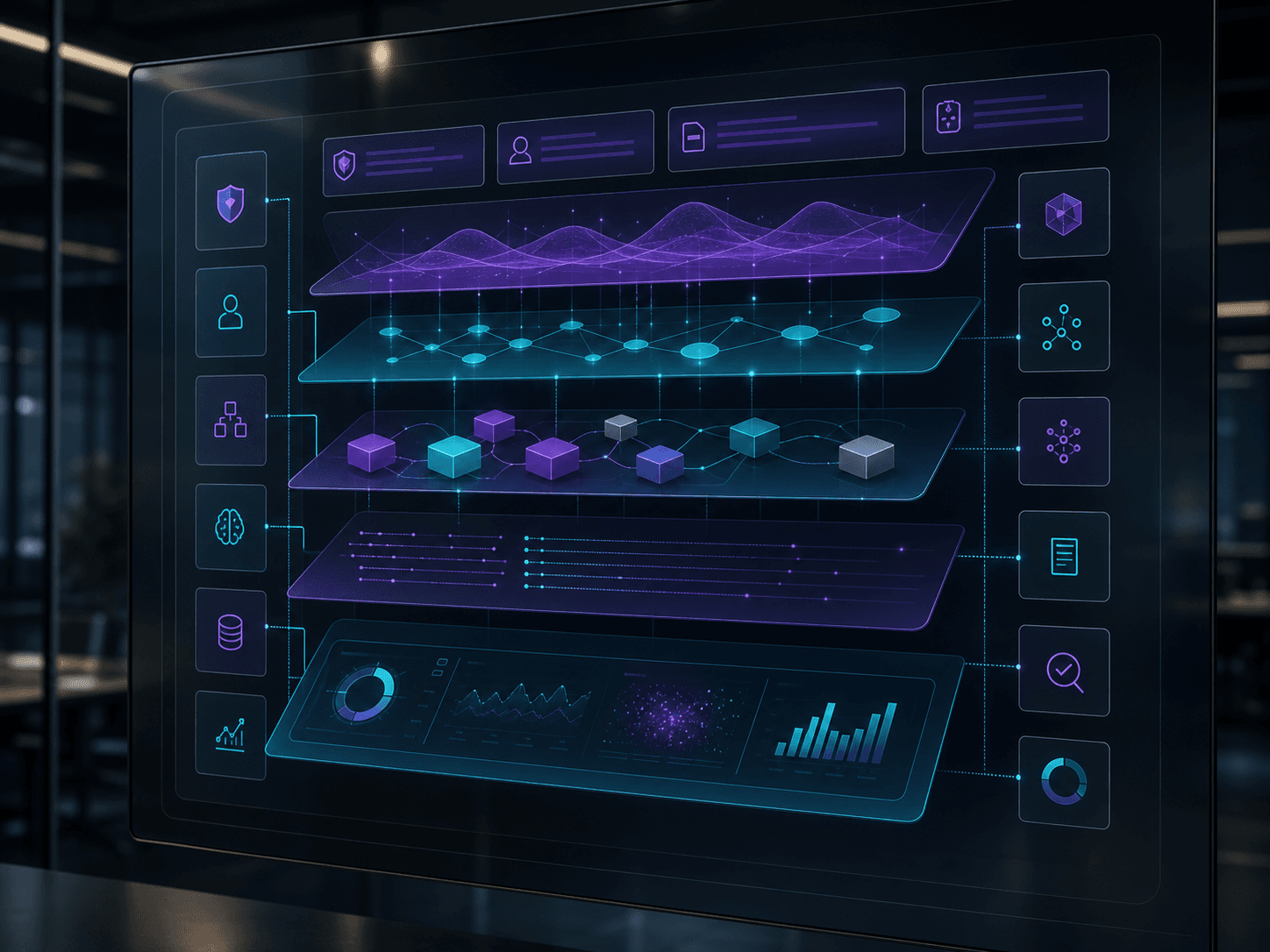
Governed agent architecture dashboard with enterprise controls
Governed operating layer

What you leave with

An operating model your team can run.

Each artifact is tied to a workflow that is live, so the operating model is tested against real work before it expands. When you want Archon Agents to keep running it, Archon Workforce puts six specialist agents under one orchestration layer, with SSO, RBAC, approval queues, and audit logs.

Ownership and decision-rights mapGovernance modelUse case portfolioWorkflow architectureExecutive scorecardExpansion roadmap

Explore Archon Workforce →

Review the Archon Agents security model →

Operating model documents, a governance binder and a scorecard on a tablet
Operating model artifacts

FAQ

AI operating model questions.

What is an AI operating model?+
An AI operating model is the structure an organization uses to run AI as ongoing business work rather than one-off projects. It defines who owns each AI workflow, how models, data and approvals are governed, how results are measured, and how new use cases are chosen, built and scaled.
What are the components of an AI operating model?+
Most AI operating models cover five areas: ownership and decision rights, governance and controls, a ranked portfolio of use cases, the platform and models the work runs on, and a measurement and review cadence. The model only works when all five are designed together and applied to real production workflows.
What does AI operating model consulting deliver?+
Good AI operating model consulting delivers a working system, not a framework document. Archon Agents leaves you with an ownership map, a governance model, a ranked use case portfolio, a first governed workflow in production, an executive scorecard and an expansion roadmap your team can run.
How do you choose a consulting firm for an AI operating model?+
Choose a firm that will build and run what it designs. Ask whether the engagement ends in a live, governed workflow, whether governance is designed in before scale, whether the architecture is model agnostic, and who operates the system after launch. A slide deck without a production workflow is not an operating model.
How does an AI operating model keep evolving after the consultants leave?+
It evolves through the cadence built into it. A regular review compares each workflow against its scorecard, retires what does not earn its place, and promotes the next use case from the portfolio. Archon Agents can stay to run that cadence with your team, or hand it to an internal owner.
Do we need an AI center of excellence?+
Not always. A center of excellence is one way to own an AI operating model, and it suits organizations with many teams building AI. Smaller teams often do better with one accountable owner, a shared governance model and a managed partner operating the workflows.

Start with one workflow

Run AI like part of the business.

Bring the workflow, the owner and the systems it touches. We will show you the operating model it needs to go live and keep earning.