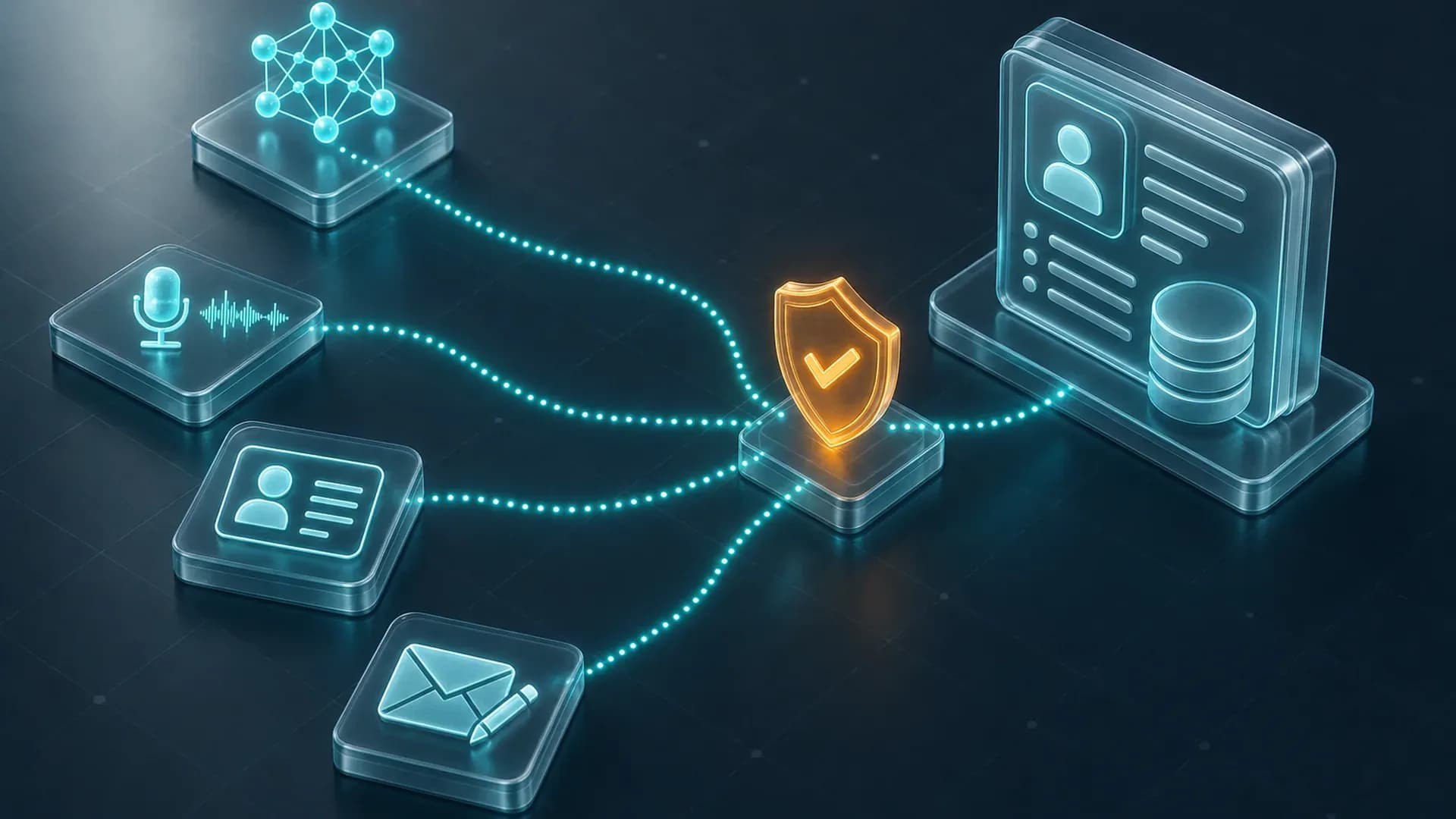
AI sales automation is the use of AI, and increasingly AI agents, to take the manual CRM work off a sales team: logging calls, updating deal fields, enriching contacts, drafting follow-ups, and keeping the pipeline clean, so reps spend their hours selling instead of maintaining records. The goal is not to replace the seller. It is to remove the administrative drag that keeps sellers out of live conversations.
Why sales teams drown in CRM work
The problem AI sales automation solves is well measured. Salesforce’s sales statistics roundup, citing Gartner survey data, reports that reps spend roughly 60 percent of their time on work that is not selling, including manually updating the CRM, hunting for the right information, and chasing internal approvals. Every one of those minutes is a minute not spent with a buyer.
That is the honest case for automation here. The CRM was supposed to be the system of record, but keeping it accurate became a second job. AI closes that gap by doing the recording as a byproduct of the work rather than as a separate task the rep has to remember.
What AI sales automation actually automates
The useful way to scope AI sales automation is by the task, not the tool. These are the jobs an AI CRM automation layer can realistically own today, each with a rep or manager still owning the judgment call:
- Activity capture: transcribe calls and meetings, write the recap, and log emails and next steps to the record automatically, so the hour a day of data entry disappears.
- Pipeline hygiene: update deal stages and close plans after a call, then flag stale deals, missing next steps, and opportunities with no recent activity.
- Contact and account enrichment: append firmographics and titles, dedupe records, and correct decayed data before it misleads a forecast.
- Lead routing and qualification: apply scoring rules and assign owners the moment a lead arrives, instead of overnight.
- Follow-up drafting: generate context-aware follow-ups and nurture emails as drafts for the rep to review and send, never as silent auto-sends.
- Forecasting support: roll real activity into manager-ready pipeline summaries and surface forecast risk from what actually happened, not from optimistic rep entries.
The line that separates help from harm: approval
The reason ungoverned automation backfires is that a wrong field written at machine speed is worse than a blank one. This is the approval queue and audit trail problem in its most concrete form. If an agent can change a deal stage, email a prospect, or overwrite a contact record with no review, one bad inference compounds across the pipeline. This is why the durable pattern is an AI workforce with approval gates: the agent prepares the update or the message, and a human clears anything that is customer-facing, irreversible, or moves a number leadership relies on. Approval is not friction here. It is what makes the automation safe to trust with the pipeline.
A blank CRM field costs you a minute to fill. A confidently wrong one, written at machine speed across every deal, costs you the forecast.
How to measure whether it is working
Treat AI sales automation like any other operation and hold it to a number. The signals worth tracking are concrete: selling time recovered per rep, CRM data completeness and accuracy, the share of follow-ups sent within a day, and forecast reliability against actual close. Gartner survey data finds that sellers who partner with AI are 3.7 times more likely to meet quota, but that outcome follows only when the automation is scoped to real tasks and measured, not switched on and forgotten.
Where to start
- Pick the single most repetitive CRM task on your team, usually post-call logging, and automate that first.
- Define what the agent can write directly and what must route to a human for approval.
- Scope the systems and fields the agent can touch to least privilege.
- Set a weekly measure, such as selling hours recovered or data accuracy, before you expand.
- Extend to the next task only once the first one holds up under review.
Put AI sales automation to work on real pipeline
Archon runs governed AI agents against sales operations, from CRM hygiene to follow-up drafting, with human approval and full visibility built in.
See Archon sales use cases→Sources
- 40 Sales Statistics to Watch for in 2026, Salesforce, citing Gartner Sales Survey data
- Sellers Who Partner With AI Are 3.7 Times More Likely to Meet Quota, Gartner, 16 September 2024
Want the automation without the risk?
The difference between speed and a corrupted pipeline is the approval layer. See how Archon governs every high-impact agent action.
See how the Archon workforce runs→